Urban burial method

Newcropolis

A design project by Oded Kishik

The problem

The problem no one talks about.

Not death

Not death.

Traditional burial

Traditional burial.

Field burial is the most common method in Israel and around the world. Every grave takes up living space and rules out any future construction on that land.

Worldwide

From New York to Paris to Beijing.

Living spaces keep getting smaller and real estate prices keep rising every year. If nothing changes, the room people have to live in will shrink significantly.
Israel

In Israel, 46,000 people die every year.

By 2050, the projected number of annual deaths will rise to 75,000.

Deaths per year, today
Projected deaths per year, 2050

Land

Every year, that much burial takes up land equal to about

football stadiums

or

three-bedroom apartments

000 / 781 units · 71 × 11

Aside from space, traditional burial also consumes a great deal of material.

  • Cement
  • Wood
  • Fuel

Research

So I went back in time to look for a solution.

Ancient Egypt

The necropolis

The pyramids of Egypt were cities built for the dead.

The days of Abraham

The field, then the family

The dead were laid in the field. A year later, their remains were moved to a family grave close to home.

Today

Cremation

Fast and compact, but it burns a great deal of fuel.

Today

Towers of gravestones

Burial stacked vertically, floor after floor.

Today · Month 1

Human recomposting

A cow’s body was shown to break down completely within nine months. The same can be applied to human bodies.

The verdict

Positive methods, with a cost.

They waste a great deal of material, and they often prevent the family of the deceased from conducting traditional burial rites.

The idea

  1. Inspired by all this, I took the pyramid structure,
  2. chopped off its top,
  3. and turned it upside down.
  4. There you have it.
Urban burial method

Newcropolis

The site

At the center of town, close to home.

Each site is built at the center of town, near residential neighborhoods. It is a space for meditationcontemplationrecreationsocializingmeditation

The solution

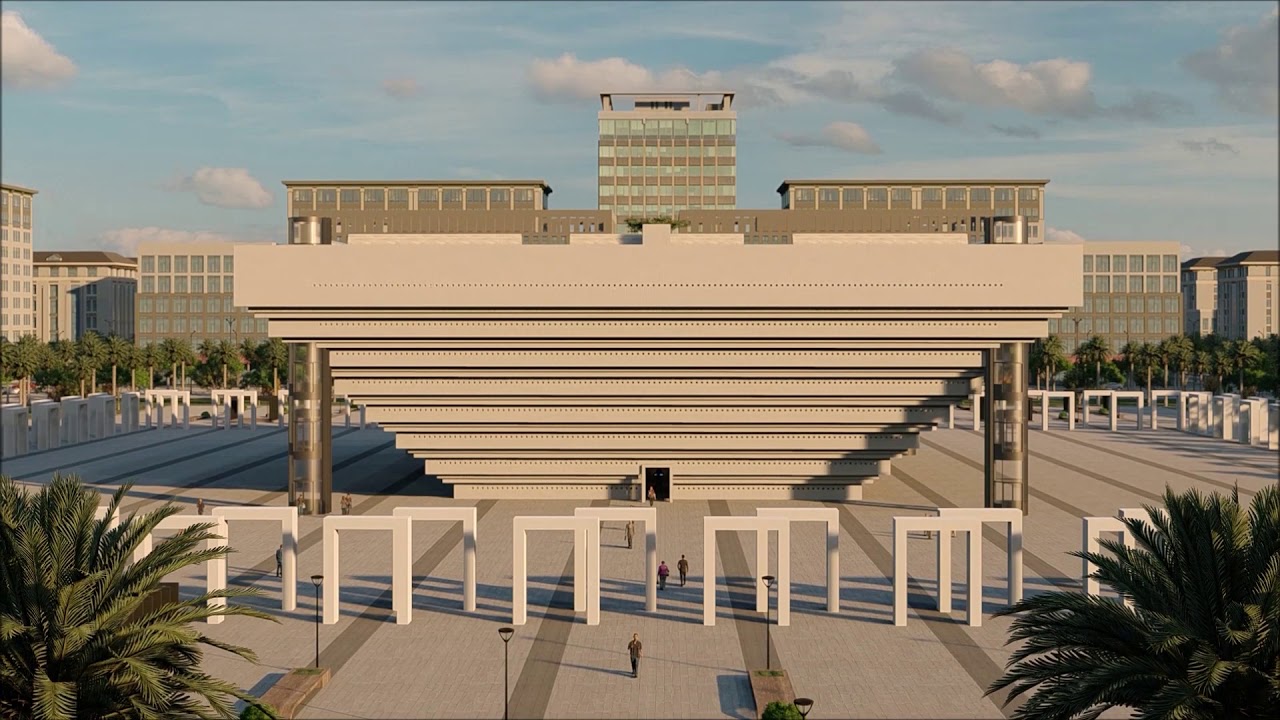
The body is buried, becomes compost within a year, then feeds the park below, while the name moves into the building.

Section drawing of a Newcropolis site: an inverted, stepped pyramid with a central core, sitting on a lower chamber below ground.
Section · not to scale · hover a letter to read about each parttap a letter to read about each part
  1. The body is buried in a soil bed on the top level of the building, under a tombstone with the family’s name note.

  2. Human composting, a proven method, turns the body into soil within a year. Rain and the bacteria in the soil do the work.

  3. The soil travels down through the building and fertilizes the park around it.

  4. The family moves the name note into the remembrance wall inside the building. The plot is ready for the next burial.

  1. A

    Roof plaza

    Open-air space for gathering and conducting burial rites.

  2. B

    Terraces

    Levels that hold grieving in groups of different sizes, and single visitors too.

  3. C

    Information stations

    Computer stations with information about the deceased buried there.

  4. D

    Lower chamber

    Soil containers that feed the site’s vegetation, and the remembrance wall.

  5. E

    Outer space

    Areas around the site for contemplation and burial rites.

Plan · burial rings around a central tree

One compound, several levels.

The structure divides into levels: a burial area, plus personal, family and public zones for commemoration and gathering.

Personal
A quiet corner for one visitor.
Family
Room for relatives to gather.
Public
Space for ceremonies and the neighborhood.

How it works

One plot. One year. Then it begins again.

  1. Day 1

    Burial

    The deceased is buried. The family places a note with their name and dates on the tombstone.

  2. Months 1–12

    A year in the soil

    Rainfall and bacteria in the soil speed up decomposition.

  3. Month 12

    Soil to garden

    Only soil remains. It moves to a container lower in the structure and feeds the site’s plants.

  4. The following year

    Remembrance

    The family gathers and moves the note to the lower chamber, into a hole in the wall.

  5. Then

    Renewal

    A different person can be buried in the same plot.

Day 1

Everywhere

Every town, several sites.

Every town across the globe will have several sites. They are identical in design and function, and differ only in size, depending on the town or neighborhood they serve.

1,000m² Average site area
Aerial · sites sized to their neighborhoods
  • Conserves resources

    No endless new land, and far less cement, wood and fuel.

  • Minimal footprint

    Soil returns to the site as fertilizer for its own vegetation.

  • Close to the bereaved

    Near home, so families can visit and mourn wherever they are.

Newcropolis is a choice in life.

Urban burial method

Newcropolis

By Oded Kishik

The film

Render of a Newcropolis site: an inverted, stepped pyramid over a city plaza Watch NewcropolisEnglish subtitles · 3:22
Design
Oded Kishik
Stop-motion animation
Shirley Neeman
Video editing
Oded Kishik
Narration
Uriah Meadan

Newcropolis · an urban burial method by Oded Kishik